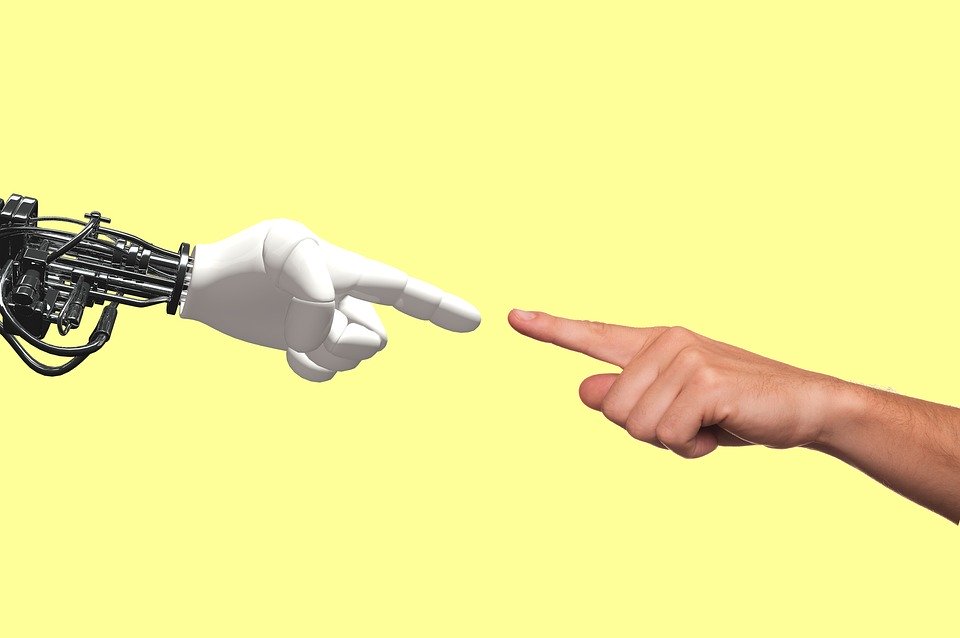
Since the dawn of technology, we humans have looked into the future with curious eyes and imaginative hearts in conceptualizing theories and projections of what futuristic inventions and innovations await us. As the rate at which technology develops begins to expand rapidly, out ideas towards what could be in store for us in the near future continue to evolve. One particularly well-written fiction book speaks of a project – The Russian Madhouse by Badman (critically acclaimed and award winning author Rick Badman) in which the author details his extensive work on advanced flywheel-powered cars, which he drives to victory at the 2037 Indy 500.
Technology is transforming our environment at an unprecedented rate. Throughout the course of just few short years, the internet, smart apps and social networking have changed how we interact and get knowledge about the planet. This has opened up new avenues for the distribution of knowledge, both true and fake, and brought new perspectives to the public dialogue of society. Comparably, the industrialization of the physical world via the internet, with billions of devices springing up and joining in, has provided new possibilities for efficiency and recreation, as well as new methods for cyber-physical systems attacks.
When we transition to a society that is more interactive and open than it has ever been before, we must always expect the improvements that technology will bring. Rapid developments in artificial intelligence highlight a future in which purpose-built robots can conduct a broad variety of human functions, displacing many types of human labor. This may result in significant efficiency increases, but also big economic and social changes. Advancements in biotechnology and synthetic biology are offering many more revolutionary changes, with advancements in medical health, disease extermination and even the expansion of human life.
Futurists have often supported and promoted unsustainable technological solutions. But why not consider the very possible implications that may come to impact us sooner or later? We need to think strategically and change the current foundations of our culture if we want to support the technologies that we know will benefit mankind.
In this article, we’ll be discussing 6 of the most promising and exciting innovations in technology that we should be on the lookout for in the near future:
- Neuro-hacking
Some severe neurological disorders continue to afflict the human race. Due to one key factor, we haven’t cracked the issue yet – because we can’t control the nerves. Once neurosurgeons and neurologists begin to yield clearer knowledge through research of nerves and their workings, we may witness at real-life hacking in the future.
Imagine making the nerves instantly reactivated following a automobile crash and without causing any trauma whatsoever. If that occurs, you should assume intellectual agility for a lifetime.
- Advancements in aerospace tech
The human race will begin its return to orbit in 2020, powered primarily by the private sector. Technology advancements have stalled after the Cold War, however, big aerospace development firms including SpaceX and Blue Origin are showing very promising breakthroughs in technology.
SpaceX is designing a “Starship” spacecraft, which would reuse the whole structure of the vehicle. Starship can reduce transcontinental space journeys to 20-30 minutes. State and international enterprises like LinkSpace are making significant spaceflight progress in China.
With these innovations in space tech, there’s no doubt that the future will yield even more highly advanced breakthroughs in technology.
- Faster computers
2020 may see the need for enhanced efficiency from edge computing devices, as improved sensors and broader AI models already support a range of different apps. There is a increasing need to infer more data while making decisions without submitting information to the server.
Processor entrepreneurs from all over the globe have built technologies to satisfy growing demand. High-performance AI chips, classified as neuromorphic or brain processors, imitate brain function and run top AI algorithms.
- Betavoltaics- recycling nuclear waste to produce electricity without moving parts
Supported by the Defense Advanced Research Projects Agency (DARPA) and operating in conjunction with Stanford University, researchers have introduced technologies close to photovoltaic systems with one significant distinction: high-energy electrons from radioactive waste-products are used instead of sun photons.
Betavoltaic processing has been around since the 1950s, but work concentrated on tritium or nickel-63 as beta emitters. The researchers’ thought was to reconsider the technology from a radioactive transit point of view and use Strontium-90, a common isotope in hazardous material.
The Betavoltaic system may potentially produce roughly one watt of electricity continuously for 30 years — which will be 40,000 times more energy dense than existing lithium ion batteries. Early uses include tactical hardware using low-energy control for a prolonged period of time or powering remote devices where replacing batteries becomes troublesome.
- Zero-size hardware
The most essential aspect of today’s technical innovations is simple – less space, more energy. Organizations like Intel and IBM are pushing intensely to produce smaller and smaller processors. As soon as we move a little further, we can expect to see more space-effective and more powerful gadgets.
It is one of the more practical new technologies, offering us more space and opportunities to work with.
- Communication though holograms like in the Sci-Fi movies
While we can create fairly convincing holograms, technological technologies could trigger all real-life contact to cease. Imagine converting your entire conscious experience to a hologram on a different part of the globe.
Direct contact is no longer needed. Some especially enthusiastic experts suggest that we should be able to combine the holographic picture with our senses and emotions.
 Oliver’s Twist