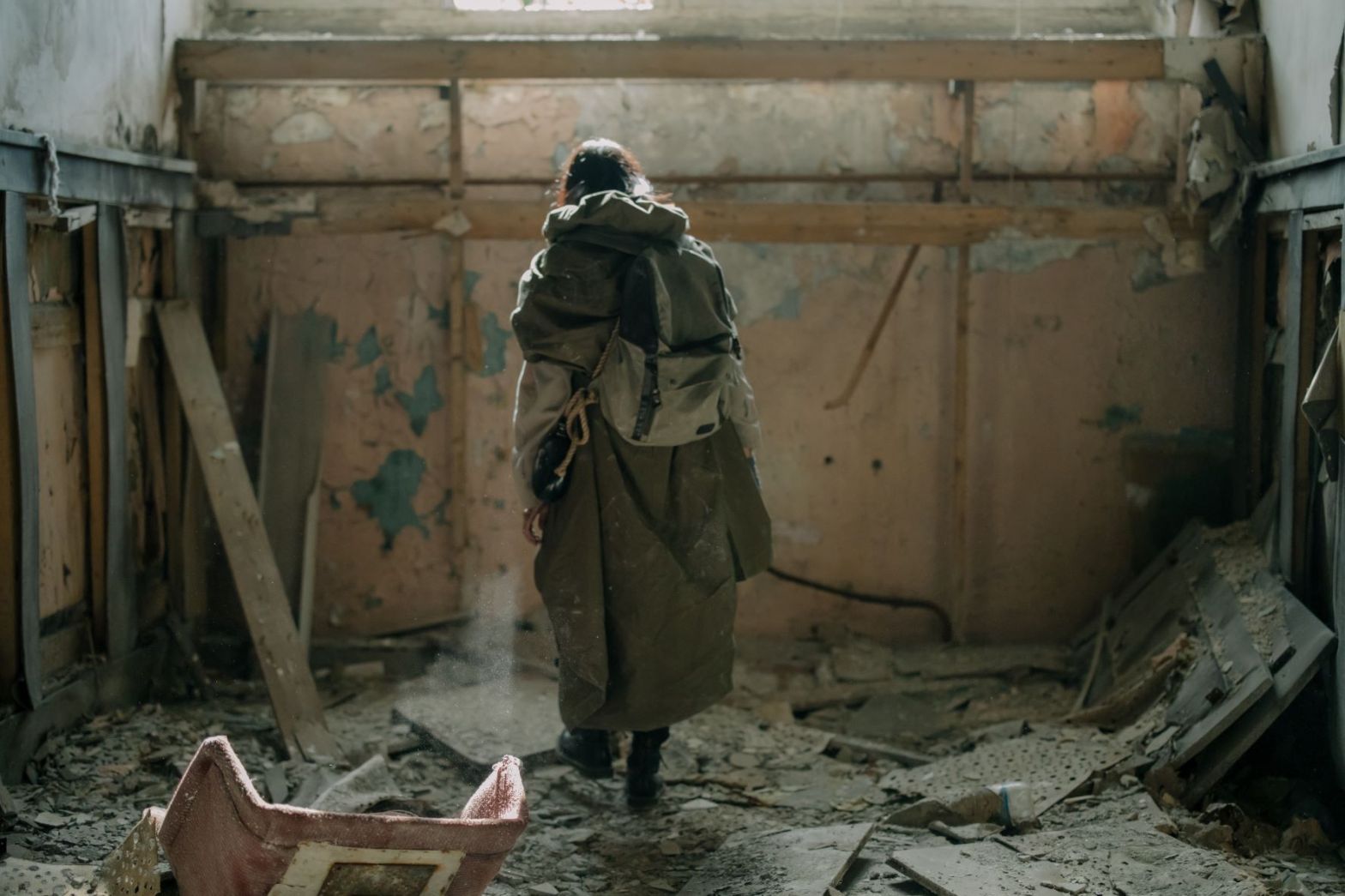
Political fiction is one branch of fiction where it might be challenging to write in. One can simply set out to write one, or they can just stumble upon political themes organically while writing about an entirely different piece. For political fiction, the setting almost always stands out. More often than not, political fiction, political novels included, is usually set in bleak settings or dystopias rather than their opposite utopias. For political stories, totalitarian dystopias are even more common.
George Orwell’s Nineteen Eighty-Four, Ayn Rand’s Atlas Shrugged and The Fountainhead, Aldous Huxley’s Brand New World, and Joseph Heller’s Catch-22 are some more famous dystopian political novels. Ray Bradbury’s Fahrenheit 451 tackles themes of book burning and censorship, the latter being a significant issue until today. P. D. James’ 2006 novel, The Children of Men, is about a human race that has become infertile, seeps politics throughout its run. The Political Fiction on books of OMAI (Old Men and Infidels) series by author Walter Clark Boutwell is also dystopian in its setting. It seems like both politics and dystopia are married to each other.
What is Dystopia?
Dystopia comes from the Ancient Greek δυσ- which means “bad” or “hard,” and τόπος, which means “place.” Hence, dystopia can mean a bad place. Dystopia is defined as a speculated community or society that no one desires. It could also mean a frightening community or society. Usually, it is treated as the opposite of Utopia, a term that was coined as a title for Sir Thomas More’s most famous work. Utopia is also a political novel.
The characteristics of a dystopia usually include a society full of paranoia. In these settings, rampant fear and distress run as an oppressive and totalitarian governments rule with an iron fist. Dystopias can also be caused by environmental disasters as well as other cataclysmic declines in society.
Dystopia and Politics
Due to the inherently bleak character of dystopian settings, they usually become instruments where authors study political ideology. Take Orwell’s Nineteen Eighty-Four, for example. This novel which is set in an England controlled by a totalitarian government, explores the dangers of total and non-stop surveillance. It also examines as to what happens to a society when a group has control of what people are allowed to think and perceive. It is a novel that bravely asks the question of what happens if members of a society are relieved of their individuality.
Speaking of control, Aldous Huxley’s Brave New World is another novel where one central group controls something that should be not. In this case, it is technology. Both of these novels are often compared to each other.
Utopia and Politics
Though not as popular setting, Utopia is also very political in nature. As stated above, the term first gained popularity as the title of another political novel by Sir Thomas More. The concept of Utopia seems to start at the origins of political philosophy, which is Plato’s Republic. As such, it is only natural for utopian stories also to be inherently political. Utopias usually present an idea and then go on to show a world wherein this idea is followed and what kind of society it brings. As such, utopias generally offer a world that is more ideal for the population.
Utopia, Dystopia, and Political Fiction
Political fiction aims to show, demonstrate, or examine political ideas. A political fiction author uses dystopia as a way to show people a world where harmful or dangerous politics such as censorship, authoritarianism, or totalitarianism reigns supreme. As such, it tries to move the reader in a direction of change. This change may be slow to come. Too slow, and people might forget the reason as to why they should keep to their ideals.
This is where utopias come in. If dystopian fiction serves as a warning if things do not change, the utopian fiction does the opposite. It allows the reader a glimpse of an idealistic society. It lets positive politics spread its wings. Thus, it inspires the reader to keep on coming for that change.
Nevertheless, both dystopian and utopian fiction can either bore or interest the reader. If executed properly, they can bring inspiration to readers as well as stick to their minds. Executed poorly, then both utopian and dystopian political fiction can be ridiculed or just treated as propaganda. The results are really just up to the author.
 Oliver’s Twist