The American Civil war was the bloodiest in the history of the United States. This includes all the wars and conflicts the American Military Force has involved themselves in, and believe me, the United States gets involved in a lot of them. From the First World War to the Second World War, and even counting the Vietnam War (arguably the only conflict America has ever lost), nothing still beats the bloodshed in the battle that was fought on American soil.
A civil war. By definition, is a war that is fought between fellow citizens split between two groups. For this reason, civil wars are often considered as battles for the soul of a country. In the case of the United States, it was a battle between “the North” who remained loyal to the Federal Union against the “the south” who wanted to secede from the Union. It was the Union against the Confederacy. In the end, it was a war that affected the soul of the United States deep at its core. A glimpse of which you can read about from countless novels such as Francis Dutch’s Book about civil war and countless others.
Reason for the War
Wars are not fought for no reason at all. Usually, it is because of opposing ideas that the two sides cannot see eye to eye. This time, it was for the sake of slavery, a problem tha\t has plagued the country even in its infancy. However, this time, the stakes are much higher due to the Louisiana Purchase and the Mexican-American war.
The Louisiana Purchase was an event that allowed the United States to expand its territory westward. This was done by purchasing approximately 828,000 sq mi of territory for fifteen million dollars at that time from France. Part of the territories included was the Mississippi River and the port of New Orleans, two areas that then-President Thomas Jefferson really wanted to acquire.
New Orleans, where Louisiana is located, was incredibly enticing as it was a port that opened out towards the sea and was thus connected to the whole world. However, it was also one of the ports that were part of the Transatlantic slave trade. Therefore, abolishing slavery would mean a loss of income for slave traders in this territory.
Belligerents
The country was divided into two sections during the civil war, the Confederate South and the Federal Union located in the North.
The Federal Union
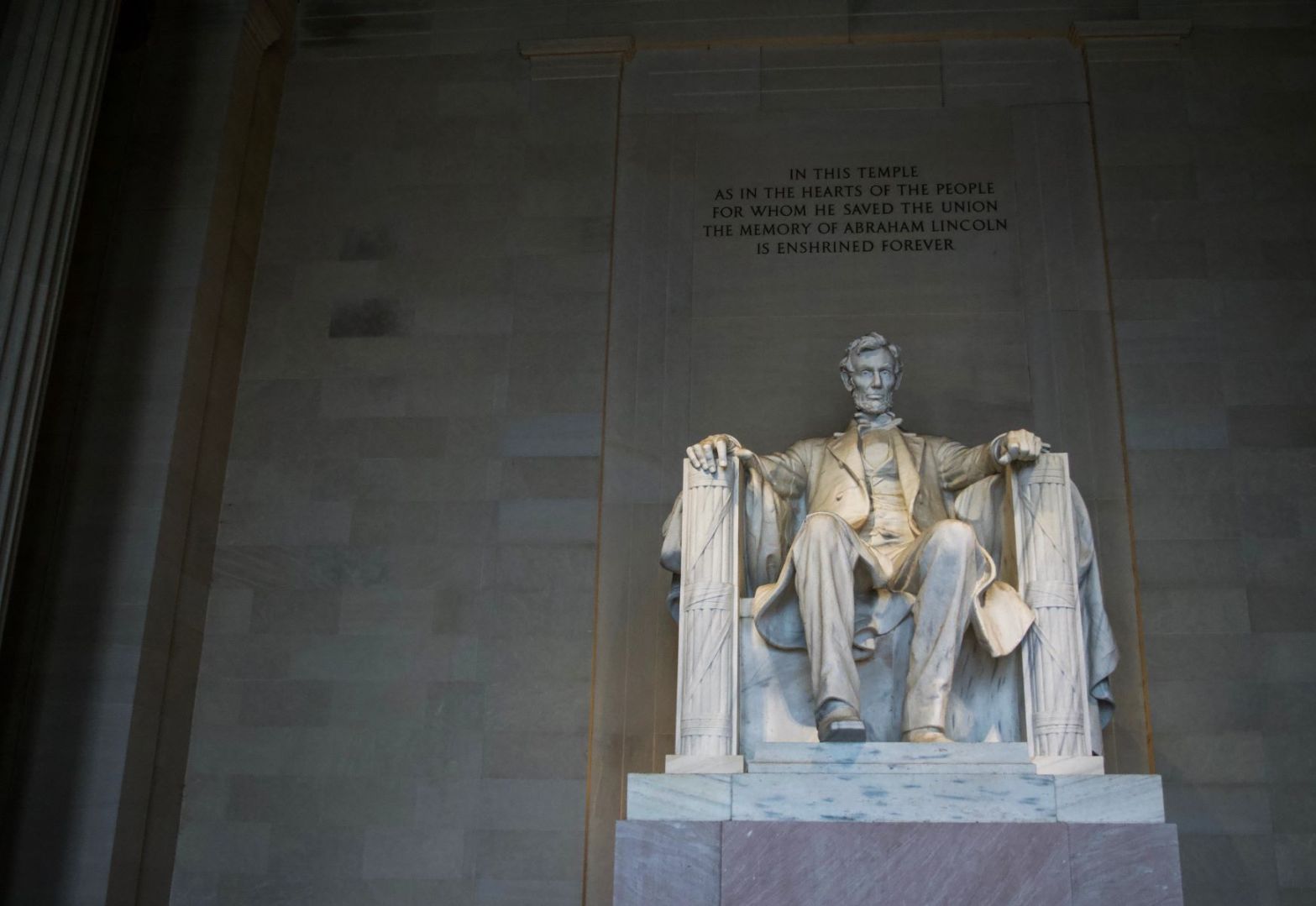
The Federal Union was commonly called the North. The United States was led and presided by Abraham Lincoln. It was so named for its goal of preserving the constitutional Union of the United States. It consisted of 20 free states and five border states. These states included: California, Connecticut, Delaware, Illinois, Indiana, Iowa, Kansas, Kentucky, Maine, Maryland, Massachusetts, Michigan, Minnesota, Missouri, Nevada, New Hampshire, New Jersey, New York, Ohio, Oregon, Pennsylvania, Rhode Island, Vermont, Virginia, West Virginia, and Wisconsin.
Delaware, Kentucky, Maryland, Missouri, and Virginia were border states with slavery in 1861. Despite that, the majority of the Union aimed to abolish slavery. Hence, they were often called abolitionists.
The Confederacy
The Confederate States of America, or simply the Confederacy, consisted of Eleven states that declared their secession from the Union. These states included South Carolina, Mississippi, Florida, Alabama, Georgia, Louisiana, Texas, Virginia, Arkansas, Tennessee, and North Carolina. These states were heavily dependent on agriculture, especially cotton farms. Their plantation system relied upon enslaved Africans to do the work around them. The abolition of slavery will shake their economy to the very core.
The End of the War
There was never really a clean end date as to the conclusion of the American Civil War. Although it was supposed to end effectively with Confederate General Robert E Lee’s surrender to Union General Ulysses S. Grant on April 9, 1865, there were still land forces who continued to surrender until June 23 of that year.
President Abraham Lincoln, who was the leader of the Union, was killed by John Wilkes Booth just five days after Lee’s surrender.
The result of the war was the devastation of much of the South’s infrastructure. The Confederacy collapsed, and true to their goal of the Emancipation Proclamation, slavery was abolished.
The end of the war also paved the way for the reconstruction era, a time when freed slaves were partially granted their civil rights.
 Oliver’s Twist