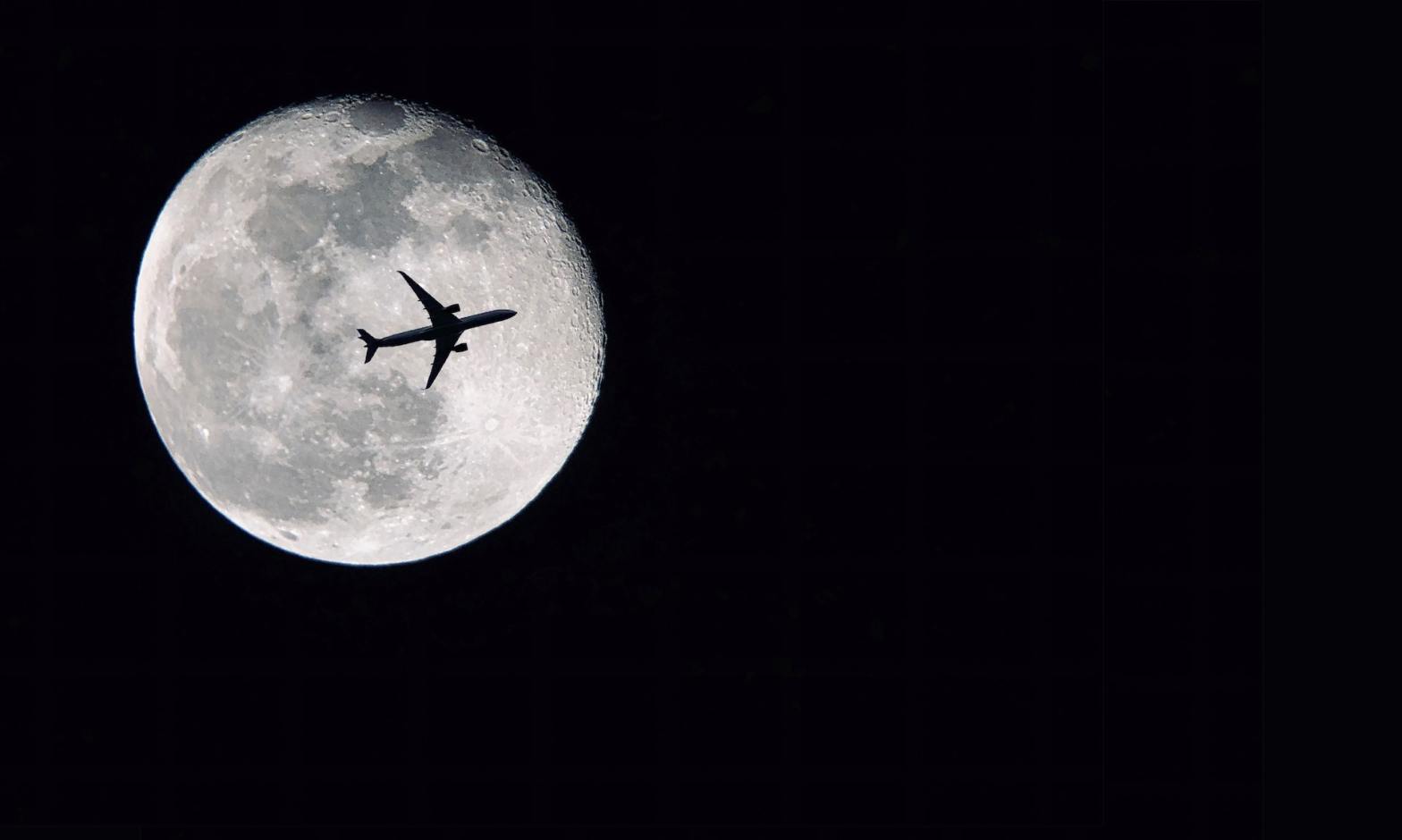
Photo by Dom Le Roy
Scott Harral’s sci-fi and mystery book, Moon Luck, is another example of humanity’s collective fascination with the moon and our growing fondness for mysteries.
From Andy Weir’s Artemis to Scott Harral’s sci-fi and mystery book Moon Luck, we humans still have quite the species-wide fascination with the moon, like it is our childhood crush, always in the edges of our thoughts but never ours. You would think that the Apollo 11 lunar landings, when men actually stepped foot on its surface, would be the death knell of our collective fantasies about the moon–it was not.
In fact, I would think that our fascination, often an obsession, with the moon has evolved, becoming subtler. But it is still there.
We may think wolves call to the moon, but there have been cultures in the past (and in the present) that worship Earth’s closest neighbor. Looking back in more detail, we can see that the moon has always figured into a special place of awe for various groups of people and civilizations.
Since the dawn of human imagination, the moon has been a prominent symbol, finding itself in different worldviews and understandings of reality, often as an agent, a god, or some other entity.
There is a particular interest in the way the face of the moon changes over time, i.e., the lunar phases, such that the most common way the moon is depicted in any art form is through the shape of a crescent which represents the moon’s later waxing or waning phases. We have also tended to associate the moon with important figures in religion, such as the Greek Selene and Artemis, the ancient Egyptian Khonsu, the Christian Virgin Mary, and Islamic Muhammad.
More practically, we have looked to the moon as a marker or a record of time. The English word for “month” itself is cognate (etymologically related) to the English word for “moon.” Although we have largely adopted the Gregorian calendar, which is based on the solar year, there are still many cultures around the world that still use a lunar calendar, most prominently the Islamic calendar.
Accordingly, in astrology, the moon is associated with our base needs, emotions, intuition, and the unconscious self (hence, folklore pertaining to a certain madness that arises during the full moon). The moon is primarily associated with femininity, motherhood, the yearning for safety, and the past. Its energy is best described as a reactive and adaptive force; some astrologers say the moon possesses a melancholic and manic character.
This dual nature of being a stabilizing and chaotic force reflects our reverent relationship with the moon as both an omen of doom and a harbinger of hope and is indicative of our primal vision of the moon as an entity ruled by two extremes: the light and dark sides.
With the advent of technology and more accurate forms and tools of observation, the moon, in the eyes of modern man, has only been elevated, our previous view of it as deific replaced by subtler forms of adoration and wonder.
Because of Neil Armstrong and Buzz Aldrin’s success walking on the surface of the moon, interest in the moon transformed from distant awe to a desire to live life there.
This is not a particularly modern phenomenon since Antonius Diogenes and Lucian of Samosata have written stories set on the moon before the 3rd century. But, with tangible evidence that the moon can be stepped on, the desire for a lunar residency has only increased.
The first ever science fiction film to be released in cinema was George Méliès’ Le voyage dans la lune, which depicts the iconic scene of a rocket ship crashing into one of the moon’s eyes (the moon here is shown having a face). And with growing instability here on Earth, lunar habitation is becoming more and more desirable.
This dream of a lunar home can best be attributed to the human attitude toward freedom–the moon is one of the last places where freedom and autonomy can conceivably be attained; the establishment of an independent moon republic is a longing for several dispossessed and disenfranchised peoples.
Yet, there is still time for that to actually happen: when humanity wakes up to the rising of the Earth on the horizon and the alarm clock synchronized to Earth time.
And until the time comes, it seems like we will still be in a cloud of admiration and awe at the moon, its mysteries circling around us, just waiting to be unraveled slowly.
 Oliver’s Twist