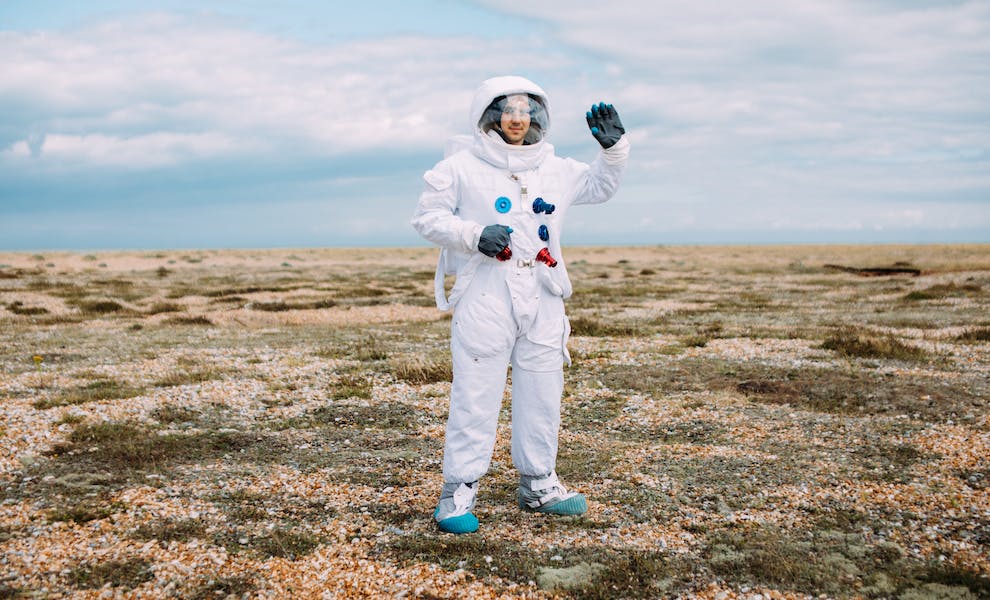
Photo by T Leish
Moon Luck, is a story of astronauts living on the moon by Scott Harral—but maybe soon, the story will become a reality; if so, what would it be like living on the moon?
Being that it is the largest natural satellite within the Earth’s vicinity and certainly the most visible, the moon has always held somewhat of a special place within the collective heart of humanity. Humans have dreamed of living on the moon for centuries. Just see many a story of astronauts living on the moon for a recent run on things!
Now, NASA is slowly working to make this primal dream a reality with its Artemis program. The goal to establish a sustainable human presence on the moon is on the horizon, and by the decade’s end, perhaps it will be finally realized—living on the moon will no longer be a dream by then.
But what it would be like living on the moon? For sure, it will be challenging; it will be demanding—but there would still be a certain gratification with it, yeah?
What It Would Be Like Living on the Moon
Housing
The first people that would be living on the moon would likely have to live in a pressurized habitat since there is no “atmosphere” to speak of on the moon. Therefore, establishing an artificial habitat is important so that they are adequately protected from the harsh lunar environment, which includes the vacuum, extreme temperatures, and harsh solar radiation.
The habitat must also be self-sufficient in providing the settlers with food, water, oxygen, and a waste management system. It must also be equipped with all the necessary equipment so that the astronauts and other scientists can conduct their research and exploration.
The small size of such a living space will be one of the biggest challenges of living in a lunar habitat; thus, the people will have to learn to live and work in close quarters with each other.
Sustenance
Food and water will be precious resources on the moon—since there obviously wouldn’t be a lot, and it would be pretty hard to go looking for some on the lunar surface. As such, the people living on the moon must carefully ration their supplies and recycle as much as possible.
A typical lunar diet would likely be pre-packaged foods and dehydrated meals. Hydroponics will also play a large role in a lunar colony, becoming the backbone for a thriving moon settlement to be realized.
Because of the glaring scarcity of water on the moon, every drop of it will have to be carefully utilized—it’s likely that urine and sweat will have to be recycled and treated, and if things have settled down, journeys looking for ice deposits would be commonplace.
Physical Activity
Because of the consequence of the moon’s lack of an atmosphere and the weakened gravitational pull, there will be a need to get enough sleep and exercise in order to stay properly healthy in the lunar environment.
Sleeping on the moon will be different from sleeping on Earth. Because of the aforementioned weaker gravitational field, people will have to sleep in unique sleeping bags that keep them from floating around.
Settlers will also need to exercise regularly to prevent muscle atrophy; thus, access to a treadmill and other exercise equipment in the habitat is critical.
Labor and Work
For a cohesive society to form, it’s important that people have something to do and contribute; it will not be different when living on the moon. People will have a lot of work to do on the moon. They are chances to conduct scientific experiments, explore the lunar surface, and build vital infrastructure.
Like on Earth, everyone will be working shifts to ensure someone is always on duty (it is important that things go smoothly and are always running). Of course, everyone will be properly compensated and given time off to recharge and relax to avoid overworking, as the conditions on the moon make people more susceptible to fatigue.
When people are not working, they will have the opportunity to explore the lunar surface. This will be a unique and exciting experience, but it will also be dangerous because of lunar hazards such as craters and boulders.
Psychological Health
Perhaps the aspect that is least known would be what effects lunar life will have on the colonists. Living on the moon will be a mentally and emotionally challenging experience, to say the least. This is especially the case for the first wave of settlers. Most everyone will be separated from their families and friends for very long periods of time, and there is constant exposure to the dangers of the lunar environment.
Because of these isolating conditions, it is essential for a lunar settlement to have a robust support system and for people there to actively take care of their mental health; thus, they will have access to counseling and other resources to help them cope with the challenges of living on the moon.
The Future of Lunar Life
The Artemis program is just the beginning of human exploration and habitation of space. In the future, we may see lunar settlements home to hundreds or thousands of people and settlements on Mars and beyond.
These settlements will be self-sufficient, with their own food production, water recycling, and energy generation systems. They will also have research facilities, manufacturing plants, and other necessary infrastructure.
Living on the moon is bound to open up a new era of scientific discovery and exploration in human history.
 Oliver’s Twist