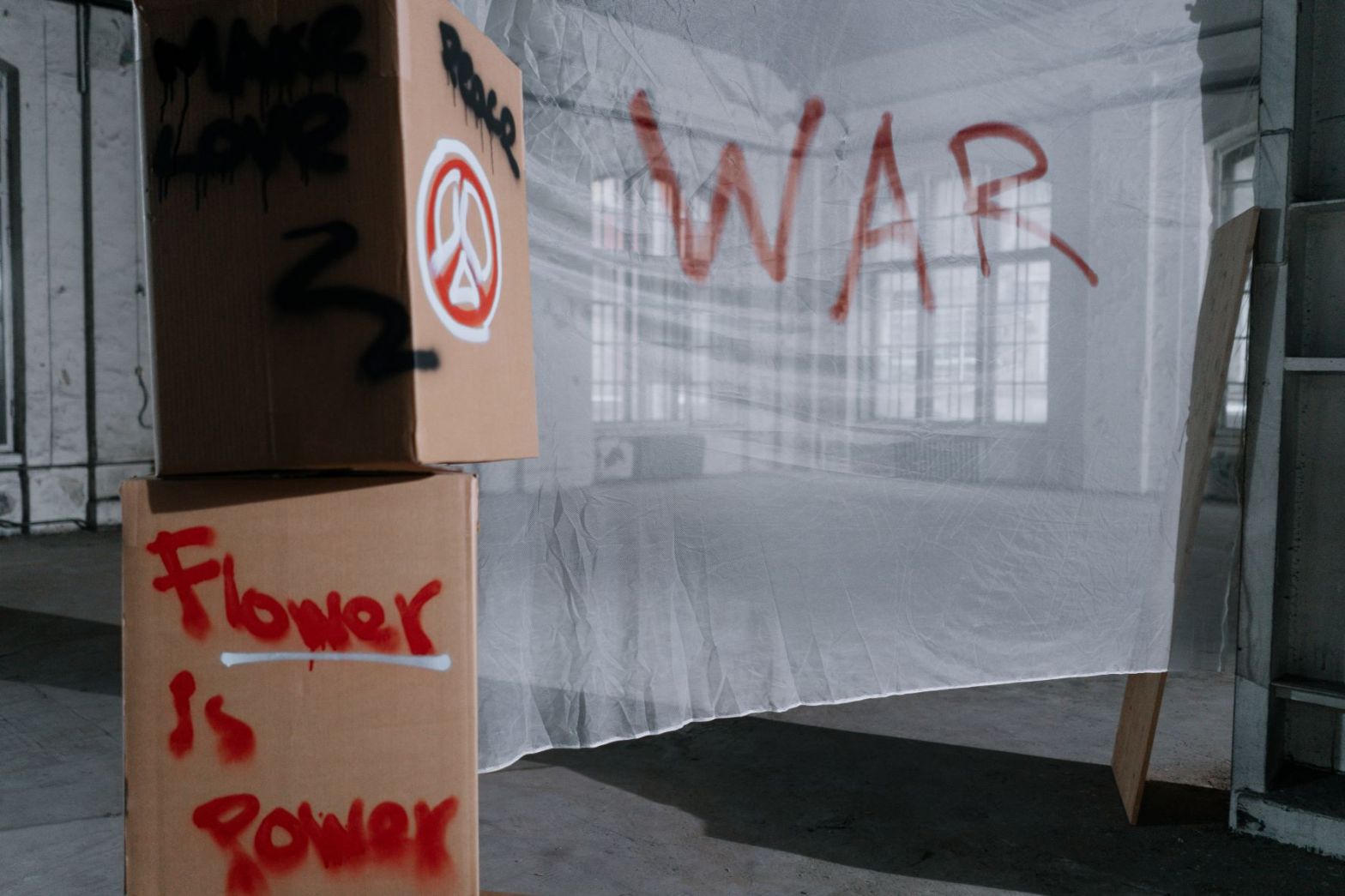
The Korean war and the Vietnam War were the first two major conflicts that the United States of America participated in after the Second World War. Of the two so-called Indochina wars, it is the latter that is more infamous and controversial. Sure, it has its supporters, but through the lens of history, the popular view seems to see the country’s involvement in the conflict in a negative light. This is evident in the fact that the majority of the country’s civilians protested against the battle. These protests were even influential in the country’s decision to have peace talks with North and South Vietnam as well as its bitter enemy in the conflict, the Viet Cong or the National Liberation Front of South Vietnam.
Nevertheless, there is a lot of media surrounding the Vietnam War. From firsthand accounts of authors such as Daniel M. Dewald, Philip Caputo, and Tim O’Brien to block-buster and Award-Winning movies like Michael Cimino’s Dear Hunter and Francis Ford Coppola’s Apocalypse Now, media about the Vietnam War became historically significant in the country. Without a doubt, the Vietnam war has been extensively featured for the consumption of the general public, for better or for worse.
In fact, one of the more famous monikers of the Vietnam war was “the television war,” so coined because of the intensity of the way the media covered the conflict. In those days, television was just gaining ground, and news reports were becoming the premier way to get information. The United States military gave these journalists and media men almost unrestricted access to the conflict partly because of their positive and optimistic sentiments toward the outcome of the war. However, this would come back to bite them as this full-on and unrestricted coverage, as well as the emerging technology surrounding television, made it difficult to censor footage covering the conflict. This meant that the general public of the United States saw this war on foreign soil from the comfort of their living rooms. Soon, the negative coverage of the press during the Tet Offensive become one of the turning points in the public’s support for the war.
Despite the popularity of television, photography and still images also affected the war in Vietnam. Photojournalists did as much work as their news reporting counterparts. Photojournalists such as Philip Jones Griffiths, Hal Buell, Catherine Leroy, and Nick Ut, as well as many others, showed the world the realities and horrors of war just as clearly and arguably with more impact with their weapon of choice, the 35mm camera. Three photographs often come to mind when talking about the conflict: that of “Napalm Girl” photographed by Nick Ut, Eddie Adam’s picture of police chief General Nguyễn Ngọc Loan executing a Vietcong prisoner, and Malcolm Browne’s photograph of Quảng Đức’s self-immolation immortalized in popular media by the band Rage Against the Machines. It is said that these three photographs had the most impact on people’s idea about the war.
Music also filled the radio airwaves during this era. Songs both supporting or pro-war and anti-war or protest songs became the soundtrack that linked both the people left stateside and the service members fighting in the war. Songs such as “Hello Vietnam” by country singer Johnny Wright and “Viet Nam Blues” written by Kris Kristofferson were more patriotic and, at times, jingoistic. Other songs that were supportive of the government’s efforts include The Spokesmen’s pro-Vietnam ballad “Dawn of Correction” and “The Battle Hymn of Lt. Calley,” as performed by C Company and Terry Nelson. These were contrasted by the anti-war and pro-peace songs such as Creedence Clearwater Revival’s “Fortunate Son” (which criticized the elites and their “fortunate children” who will never face war) as well as “We’ve Gotta Get Out of this Place” by the Animals. This song became the anthem of US military forces stationed in South Vietnam. Such tunes resonated with the growing anti-war sentiment. Both pro-war and anti-war genres competed in the airwaves, but in the end, it was peace that won, as apparent as some music that is still in the public consciousness today. It only takes one to do a google search of “Vietnam War-era music,” and the results will speak for itself. Other musicians that defined the era include Bob Dylan, John Lennon, Nina Simone, and Joan Baez.
Without a doubt, the media was pivotal in shaping how America saw the Vietnam war. It shaped not only the discourse of the people then but also the overall identity of America. America’s present generation would not be it is now without the extensive news coverage, as well as the inspirational and impactful music, films, and photographs that talk about the conflict. As such, these pieces could serve to teach essential lessons going forward.






 Oliver’s Twist