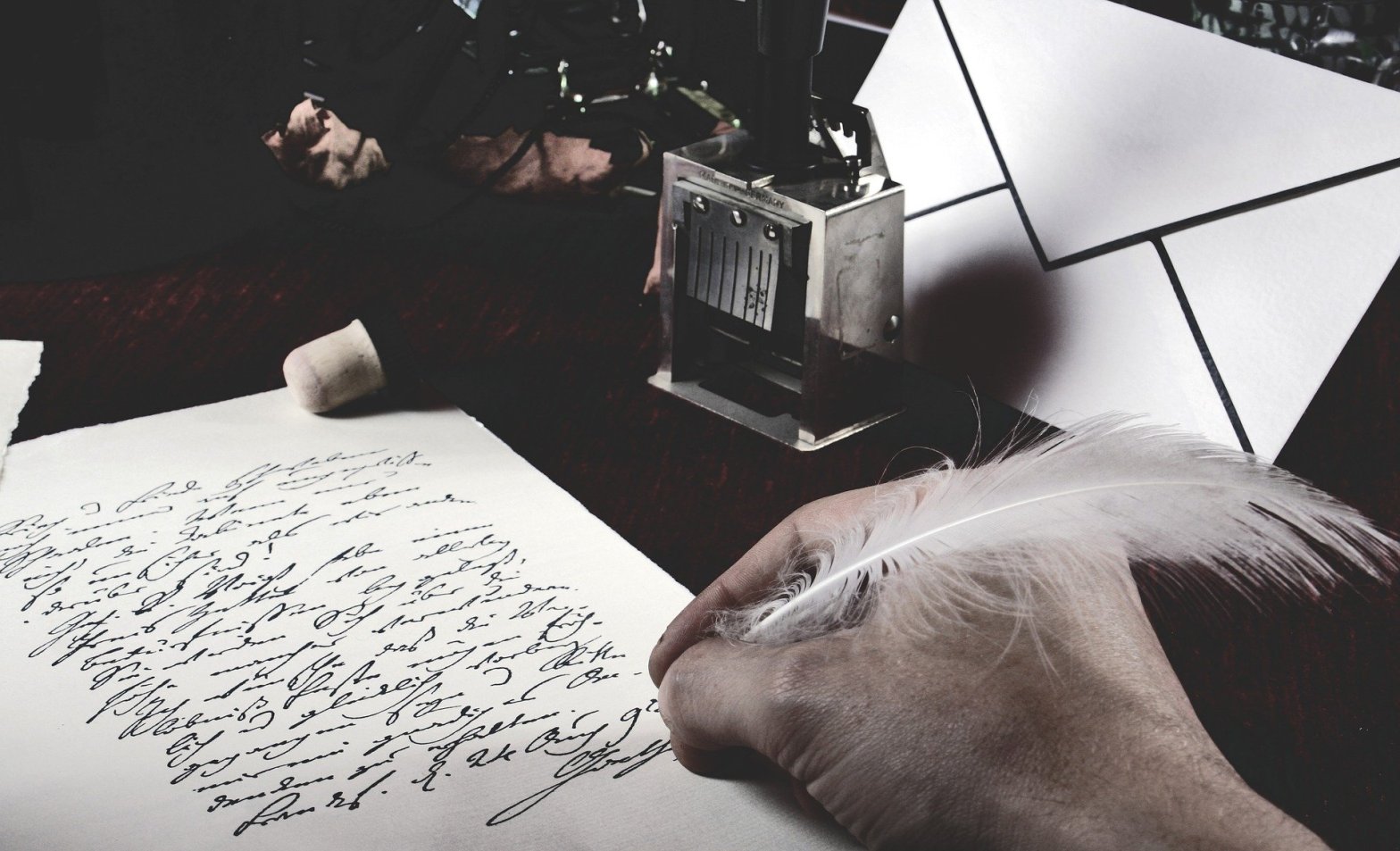
Poetry is a good avenue for self-expression. A lot of people turn to poetry in order to find comfort, to be understood, to seek refuge, to experience love, to mend pain, and more. It is not just merely writing rhymed lines for the sake of aesthetics but it is all about expressing the thoughts and emotions that have wanted to be freed for so long. Poetry are among the hardest craft to practice for doesn’t lay down the message that the poet wants the readers to comprehend. It uses figurative language, meter, and other elements that will maintain its beauty, intricateness, and substance.
However, literature is a broad place and poetry is just one of its corners. Similar to the freedom of expression that poetry brings, there are a lot of novels with true-to-life stories that exist in order to let the readers know the duality of life. A great example is the memoir Weapons of War that spills the fear and doubt of Robert Wright and all his other emotions while fighting in the Vietnam War.
Back to the wonderful corner of poetry, there are many anthologies, books, and poems that were written genuinely by the poets in the hopes of communicating to the readers that may have encountered the same experiences at them. Some also write poems to let out all the burdens in their hearts caused by fears and uncertainties.
Emily Dickinson
Emily Elizabeth Dickinson was born on the 10th of December, 1830 in Amherst, Massachusetts at the Dickinson’s homestead. She grew up in a family that is well-known but not rich. Emily studied in the Academy for 7 years and has taken different classes including Latin, history, classical literature, and a lot more. Her teenage years were quite rough for she has to deal with grief and melancholy after her second cousin died of typhus.
She has written almost 1,800 poems but there are only a total of 10 of her works that were published. Most of the published poems of Dickinson were crucially edited in order to suit the modern or conventional rules of poetry. In her time, her works are considered unique for they are usually brief, perfect rhymed, without titles, and contains irregular use of punctuation and capitalization.
Robert Frost
Robert Lee Frost was birthed by Isabelle Moodie, a Scottish immigrant, in San Francisco, California on March 26, 1874. He attended Dartmouth College and Harvard University but he was unable to get a degree on both schools. Frost was popular for his real-life representation of the country life and his command in American colloquialism. He usually writes about setting from the countryside and what rural life is about in the early 20th century New England.
Among his notable works are A Boys Will and North Boston. Because of his contributions to literature, he was awarded with the Pulitzer Prize for Poetry and Congressional Gold Medal. Moreover, Frost was married to Elinor Miriam White. In January 29, 1963 at Boston, Massachusetts, Robert took his last breathe and laid rest forever.
Sara Teasdale
Sara Trevor Teasdale is an American poet. She was born on August 8, 1884 at St. Louis, Missouri. Because of having a poor health condition as a child, her parents put her to homeschool. She didn’t attend a real academic institution for 9 years. But when she turned 10, her health condition improved and that was her ticket into studying at Mary Institute in 1898. Sara transferred to Hosmer Hall after a year and graduated successfully in 1903.
She has written many poems and has left a legacy. Examples of her works are Helen of Troy and Other Poems (1911), Sonnets to Duse and Other Poems (1907), Rivers to Sea (1915), Love Songs (1917), Dark of the Moon (1926), Stars To-night (1930), etc. Unfortunately, Sara committed suicide and people suspected that the poem I Shall Not Care written by her was her suicide not.
John Keats
John Keats was the offspring of Thomas Keats and Frances Jennings. He was born in Moorgate, London on October 31, 1795. However, he and his family stated that he was given birth on October 29 but what was documented in his baptism files was the 31st of the same month. Due to unfortunate circumstances, his father’s life ended because of skull fracture. Furthermore, Keats was among the notable literary heroes during his time, together with Percy Bysshe Shelley and Lord Byron.
It was not until the late 19th century that people started to love Keats among the other English poets of his time. In February 23, 1821 at Rome, Papal States, John Keats died because of tuberculosis. He was only 25 years old when tuberculosis took his life. After years of his death, his poems garnered multiple positive responses and have created several influences on the lives of other writers and poets.
 Oliver’s Twist